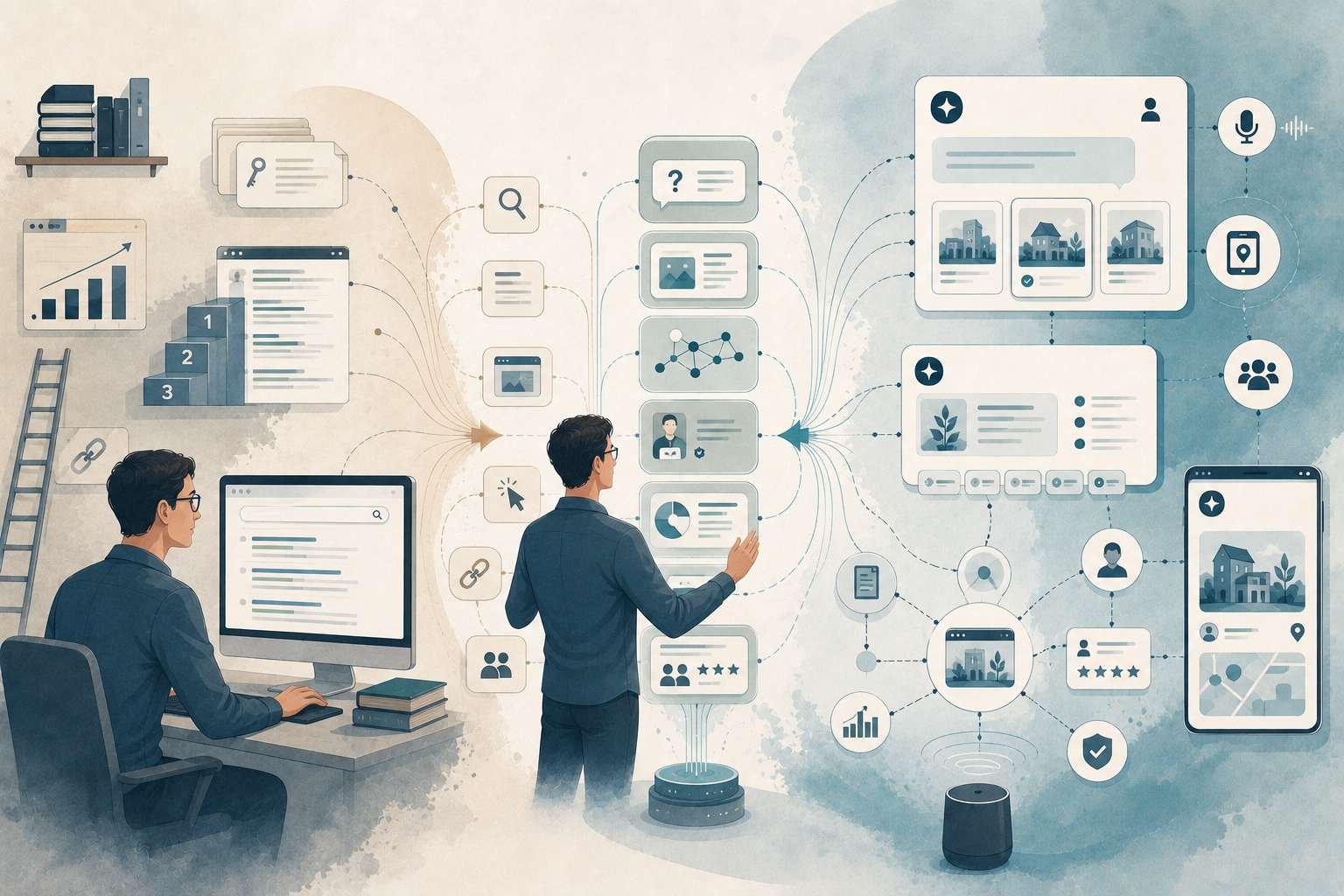
That model has changed. In 2026, buyers ask questions to AI engines and get immediate direct answers without visiting multiple websites.
This shift creates a crucial question for business owners: Should you focus on Google AI Overviews, or rely on a specialized AI SEO Service? Understanding SEO vs GEO is essential for staying ahead.
Understanding the Platforms
To build a strong strategy, you must first understand where users find information.
Google Search
This is classic search. Users type short, broken terms like "best plumber near me". Google checks its index and returns a list of blue links. Rank #1 gets the most clicks. It remains effective for local services and quick brand searches.
Google AI Overviews
Google AI Overviews sit at the top of traditional Google results. Powered by Gemini models, this feature reads top-ranking pages, pulls core facts, and writes a neat summary box directly on the page. Users get their answers right away without opening new tabs.
ChatGPT
ChatGPT functions as a conversational assistant. Users ask complex, multi-step questions like, "Which CRM tool works best for a small agency with a $500 monthly budget?" It reads top web sources, synthesizes the findings, and recommends specific products or brands.
Gemini
Gemini powers Google's AI ecosystem. It handles complex tasks, real-time data pulling, and personal planning. Because it connects directly to Gmail, Docs, and Maps, its recommendations are deeply personalized to the user's workflow.
Perplexity
Perplexity functions as a live research engine. It treats every question like a research prompt, searching the web in real-time. It displays concise answers along with inline numbered citations, making it popular among executives and researchers.
| Feature | Google Search | Google AI Overviews | ChatGPT | Gemini | Perplexity |
| Primary Output | 10 Blue Links | Summary Box at Top | Conversational Text | Integrated Workspace | Cited Research Report |
| User Intent | Quick Lookup | Rapid Answer | Complex Advice | Productivity Tasks | In-depth Research |
| Citation Style | Web URLs | Inline Source Badges | Footnote Links | Google Ecosystem | Numbered Citations |
| Main Advantage | High Local Traffic | High Visibility | High User Trust | Cross-App Context | Real-time Accuracy |
How Buyer Behavior Is Changing in 2026
Customer habits have shifted fundamentally.
- Search Keywords are Longer: People no longer type short, fragmented phrases like "buy running shoes." They ask conversational questions like, "What are the best cushioned shoes for long-distance road running with flat feet?"
- The Rise of Zero-Click Searches: More than 60% of searches now end without a click. Users read the AI Search summary, find their answer, and move on.
- Recommendations Replace Search Lists: Instead of comparing 10 websites, users ask AI tools to narrow options down to the top 2 solutions.
Why Businesses Need Both SEO and AI Visibility
Relying on Traditional SEO alone leaves significant gaps in your traffic strategy. However, abandoning SEO entirely for AI Search creates other issues.
The Limits of Traditional SEO
Traditional SEO focuses on keyword density, fast load speeds, and backlinks. These signals help you rank on Google. But if an AI box answers the user's question first, your position #1 ranking may see fewer clicks than before.
The Rise of GEO (Generative Engine Optimization)
GEO focuses on getting your content cited inside AI answers. AI models prioritize clear, structured facts over promotional marketing copy. If your brand is not structured for AI extraction, these models will cite your competitors instead.
The Hybrid Solution
An effective AI SEO Service combines both frameworks. Traditional SEO builds domain authority and crawling access. GEO formats that authority so AI engines can read, extract, and cite your content easily.
Building a Future-Proof Marketing Strategy
To protect your organic traffic and adapt to the Future of SEO, focus on these four actionable steps.
- Adopt an Answer-First Format: Put concise 50-word direct answers at the top of your articles, followed by detailed explanations. AI engines extract these clear summary blocks directly.
- Implement Schema Markup: Use JSON-LD structured data. This code translates your content into clear facts that machines can analyze without guessing.
- Build External Mentions: AI models verify claims across the web. If industry news sites, forums, and reviews mention your brand, AI engines treat you as a trusted source.
- Unblock AI Web Crawlers: Ensure your robots.txt file permits bots like GPTBot, PerplexityBot, and Googlebot to index your content.
Conclusion
When choosing between Google Rankings and AI Recommendations in 2026, the short answer is: you need both.
Google rankings build foundational search traffic and establish online domain authority. AI recommendations place your brand directly in front of high-intent buyers seeking quick answers. Investing in a modern AI SEO Service ensures your business remains visible across traditional search pages and new AI answer engines alike.
Faqs -
Q1: What is the main difference when comparing SEO vs GEO?
A1: Traditional SEO optimizes web pages to rank higher on search engines for specific keywords. GEO (Generative Engine Optimization) optimizes content so AI engines can read, summarize, and cite your brand inside generated answers.
Q2: Will Google Search be completely replaced by AI Search?
A2: No. Traditional Google Search remains essential for local services, brand searches, and transactional queries. However, Google AI Overviews and AI engines handle a growing share of informational searches.
Q3: How does an AI SEO Service help my business grow?
A3: An AI SEO Service updates your content architecture. It structures your pages for conversational questions, adds schema markup, and builds digital PR to earn citations across Google, ChatGPT, and Perplexity.